In Conversation With - Thy Ha
Interview
-
We first met Thy Hà’s work in the soft hum between code and craft: a monospace that remembers schoolbook strokes, a display face that carries the swagger of Saigon’s street signage, and interfaces that read as clearly as they feel.
Thy Hà’s practice sits at the intersection of code, craft, and culture. Born in Việt Nam and now based in Melbourne, Thy moves fluidly between typographic drawing and digital design, translating everyday vernacular into systems that work across languages, scripts, and screens.
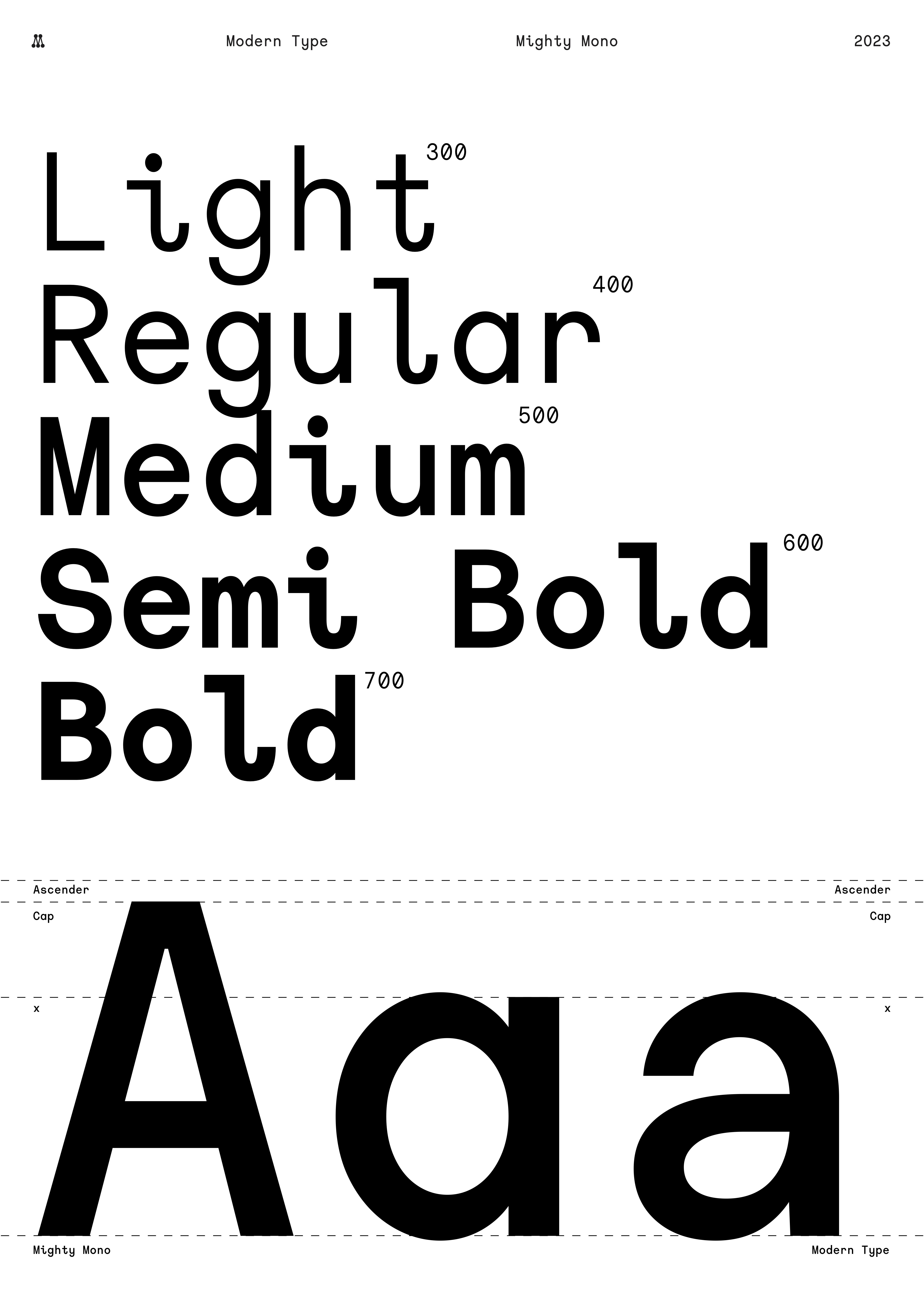
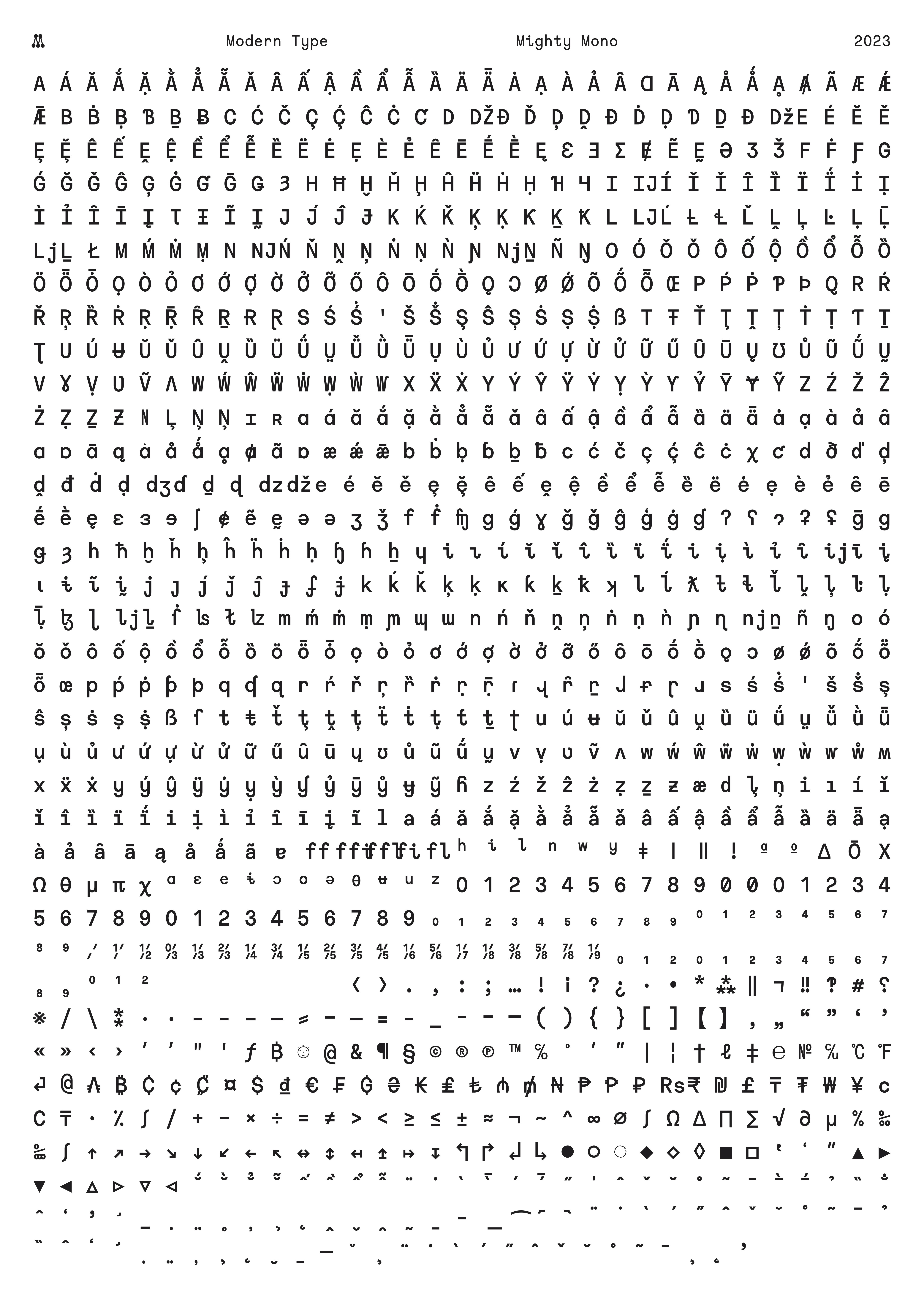
Her practice is anchored in access. Where most Latin typefaces treat Vietnamese diacritics as afterthoughts, Thy centres them structurally, aesthetically, and culturally. MT Mighty Mono distils the geometric letters of primary-school workbooks into a contemporary monospace; Mai Display channels reversed-contrast exuberance from hand-painted shopfronts. Both refuse to flatten Vietnamese into “extended Latin,” insisting instead on forms that read correctly, feel familiar, and dignify the language’s tonal nuance.
This commitment carries into her digital projects. On Open Glossary for artist James Nguyen at ACCA, Thy approached multilingual UX as more than font substitution, pairing scripts thoughtfully, respecting right-to-left structures, and choosing tools that keep costs low so language diversity is not a luxury feature. Across studios, collectives, and communities such as Lưu Chữ, Counter Forms, Modern Type—she treats design as civic infrastructure: usable, affordable, systematic.
What follows is a candid exchange about privilege and pay-it-forward ethics, the pragmatics of stacked diacritics, moving between self-initiated type and collaborative UX, and the stubborn joy of making tools that widen who gets to participate. Same same but different; research and revival; looking back to move forward.
Your design journey spans Vietnam and Melbourne. How have those different cultures and places shaped your approach to design?
I grew up in Sài Gòn (Hồ Chí Minh City), Việt Nam. It's vibrant, you feel like the city never sleeps. There's always something happening, even in the smallest details. Shop signage mixes hand-painted lettering with modern typography (like Cooper Black), old and new sitting side by side. It's a kind of visual maximalism, with layers upon layers competing for attention.
Melbourne, by contrast, moves slower. It's quieter, more reflective. The access to libraries, museums, and galleries here has let me dive deeper into design history and Western typographic traditions in ways that weren't really available in Vietnam. Stone carving, historical revival typefaces, all that stuff.
Both environments have shaped my design sensibility in different ways. Same same but different, as they say. In Vietnam, I absorb inspiration from everyday life, it's immediate, it's all around you. In Melbourne, I have the resources to research and explore design history more thoroughly. And importantly, there's plenty of Vietnamese food in Melbourne, so it still feels like home!
Can you share a memory, influence, or tradition from your upbringing that continues to inform your design philosophy today?
Growing up in Vietnam, I studied design at RMIT Vietnam, which most people called the "university for rich kids" because the tuition fees were so much higher than standard universities. My family wasn't wealthy, but we were comfortable enough to afford it. That made me more privileged than a lot of young people, and I've always been aware of that. I want to use that opportunity to pay it forward.
I think that's why I'm driven to create things that are usable, but also affordable and accessible.
For most Vietnamese, fonts are expensive, especially when they're from Western type foundries. A standard font costing $75 USD represents about 15–20% of the average monthly salary (around $450 according to Wikipedia). That's significant. So people pirate fonts, download them illegally. When I was younger, I thought that was just... wrong. But as I've got older, I understand why it happens. And I realised I could do something about it, create typefaces that are affordable and accessible, but still well-designed and functional.
Your thesis projects, MT Mighty Mono and Mai Display, both centre Vietnamese diacritics. What inspired you to develop these typefaces, and how did your cultural background shape the design decisions?
Both typefaces draw from different aspects of my Vietnamese upbringing.
Mighty Mono is inspired by the geometric letterforms in my primary school textbooks and the cursive style I learnt to write, where letters like 'i' and 't' had little tails, ‘a’ is a single-storey one. Those early learning materials became part of my visual vocabulary, and I wanted to bring that into a contemporary type design.
Mai Display comes from the vibrant shop signage in Saigon, where I grew up. It's a reversed-contrast typeface, almost the opposite of Mighty Mono's restraint. The diacritics are much more expressive and display-oriented, capturing that bold energy of Vietnamese street typography created by signwriters, not trained typographers.
What unites them is centring Vietnamese diacritics rather than treating them as afterthoughts. They're often tacked onto Latin typefaces without consideration for Vietnamese readers. By making them integral to both designs, I'm asserting these marks deserve the same attention as any other letterform, because my cultural background showed me they're not decorative additions, they're essential to Vietnamese language. It’s also a core principle of my (so-called) type foundry!
What were the key challenges of designing a type system that could carry cultural resonance while also functioning across different contexts?
Vietnamese is a tonal language with stacked diacritics, and when you look at vintage shop signage in Vietnam, those diacritics are incredibly expressive and stylistic. Sometimes the marks extend across multiple letters – for example, the grave accent (dấu huyền) can become a long horizontal line that sweeps across several vowels.
In type design, though, you have to manage space systematically. Stacked diacritics can extend above the standard vertical metrics of a glyph, which creates potential collisions with neighbouring letters. With Mai Display, the challenge was honouring those expressive cultural references whilst working within the constraints of digital fonts. It's about finding where cultural authenticity and technical function can coexist without compromising either.
How do you see type design as a way of expressing individuality and cultural heritage?
Type design is like a universal language. Designers from different countries can all speak it, but with different ‘accents’. For me, it's a way to communicate with the world while staying connected to my heritage. It lets me explore the history of Vietnamese typography and use digital tools to preserve it in a contemporary way. So it's both looking back and moving forward at the same time.
You designed the Open Glossary website for James Nguyen’s project at ACCA Melbourne. Given its multilingual nature, how did you approach typography and design to accommodate different languages?
Open Glossary is a website that translates terminology across different languages, so designing with multilingualism in mind was essential. We needed fonts that were affordable, accessible, and had extensive language support. So Google Fonts was the obvious choice. The main typeface for Latin texts is Work Sans which is designed by Wei Huang, an Australian/Melbourne-based type designer actually. And the other typefaces are also available on Google Fonts.
Through this project, I learnt how to properly typeset in different languages, like how Arabic reads right to left, how to pair fonts across different scripts so they work together visually. It was a practical crash course in how typography needs to adapt structurally, not just aesthetically, when you're working across multiple writing systems.
This project sits closer to UI/UX design than type design. How do you navigate moving between self-initiated type projects and collaborative digital/UX work?
I've always been interested in UX/UI and web design, I love the magic that happens when code and design come together. I freelanced for a bit, but before that I worked at a digital agency for three years. After about 1.5 years there, I asked my boss and managers if I could go part-time (four days a week) so I could dedicate one day to type design, and they were really supportive. That balance let me keep both practices alive.
Now I'm freelancing full-time, which gives me even more flexibility to move between the two, depending on what the project needs or what I'm excited about at the time. With web design, I get to use fonts. With type design, I get to draw fonts. Best of both worlds!
What does your design process look like, whether in type design or digital projects? Is there a throughline across disciplines?
The processes are actually pretty similar, they both follow a structure of research, development, testing, and refinement.
For digital or web design, it starts with analysing the brief, then research, design direction, full design, development, QA, publish, and updates.
For type design, it's more like: having a brief or finding inspiration (maybe a revival typeface or something in a book), sketching out the skeleton with a few characters, full design, testing, production, release, and updates.
The throughline is that both are iterative and systematic.
Have collaborations with other designers, artists, or communities influenced your work in unexpected ways?
Definitely. Being a part of Lưu Chữ has been really valuable, we've been able to explore Vietnamese typography together while I'm overseas, and share our practices and experiences. Being part of Counter Forms has connected me with type designers at different experience levels, which keeps me learning. And collaborating with Modern Type has pushed me to think more about multilingualism and designing with society and community in mind, not just individual users. Those perspectives weren't things I was actively thinking about early on, but they've become central to how I approach projects now.
What challenges have you faced as a multicultural designer in Australia, and what networks or support systems have been most valuable?
Language barriers, mainly, but not just in the obvious ways. When you're working on web design for government, health, or cultural projects, there's a whole layer of Australian cultural context you need to understand. References, tone, even the way certain institutions communicate: it takes time to learn. I spend more time researching, more time asking colleagues to fill in the gaps. It's manageable, but it's an extra step that someone who grew up here wouldn't think twice about. The colleagues who've been willing to explain those nuances, not just the words but the context behind them, have been invaluable. Those informal conversations make all the difference.
Looking ahead, what opportunities or directions in your practice excite you most right now?
I'm applying to do research on Vietnamese typography and font licensing! If my proposal gets approved, it would be incredibly exciting. It would let me dive deeper into questions I've been circling around in my practice – how Vietnamese typography has evolved, and how to turn pirate font practices into something legal and community-focused. It feels like the natural next step for everything I've been working on. I just can't wait to be a researcher again!
What advice would you give to young designers, especially those navigating multiple cultural identities about building meaningful practices?
I'm not sure I'm the right person to give advice! But I'd say: be brave and be proud of who you are.
Design is often seen as this Western practice, and when you're starting out, it's easy to look to the West for inspiration, theory, everything. But here's the thing: design is fundamentally about improving how people experience life. That means it's deeply connected to daily life, to the things around us, to culture.
So take those Western design theories, sure, but see how they can be used or, better yet, enhanced by your own culture. Same same but different. Your multiple identities aren't something to navigate around. They're what make your perspective unique and valuable.
If you had to describe your design philosophy in three words, what would they be?
Accessible, Usable, Systematic
Thy’s practice reminds us that typography is not ornament, it is access. By placing Vietnamese readers at the centre of form-making, she reframes “internationalisation” as care work: technical precision in service of cultural continuity. As she pursues research into Vietnamese typography and licensing models that turn piracy into community benefit, Thy continues to build the kinds of tools that let more people read, write, and belong.